
The Biggest Mistake Brands Make with Trade Shows Isn’t Design. It’s Execution.
Trade shows remain one of the most powerful channels for B2B brands to build relationships, launch products, and generate qualified leads. Yet despite the significant investment brands make in exhibit design, fabrication, shipping, and staffing, many trade show programs still fall short of their full potential.
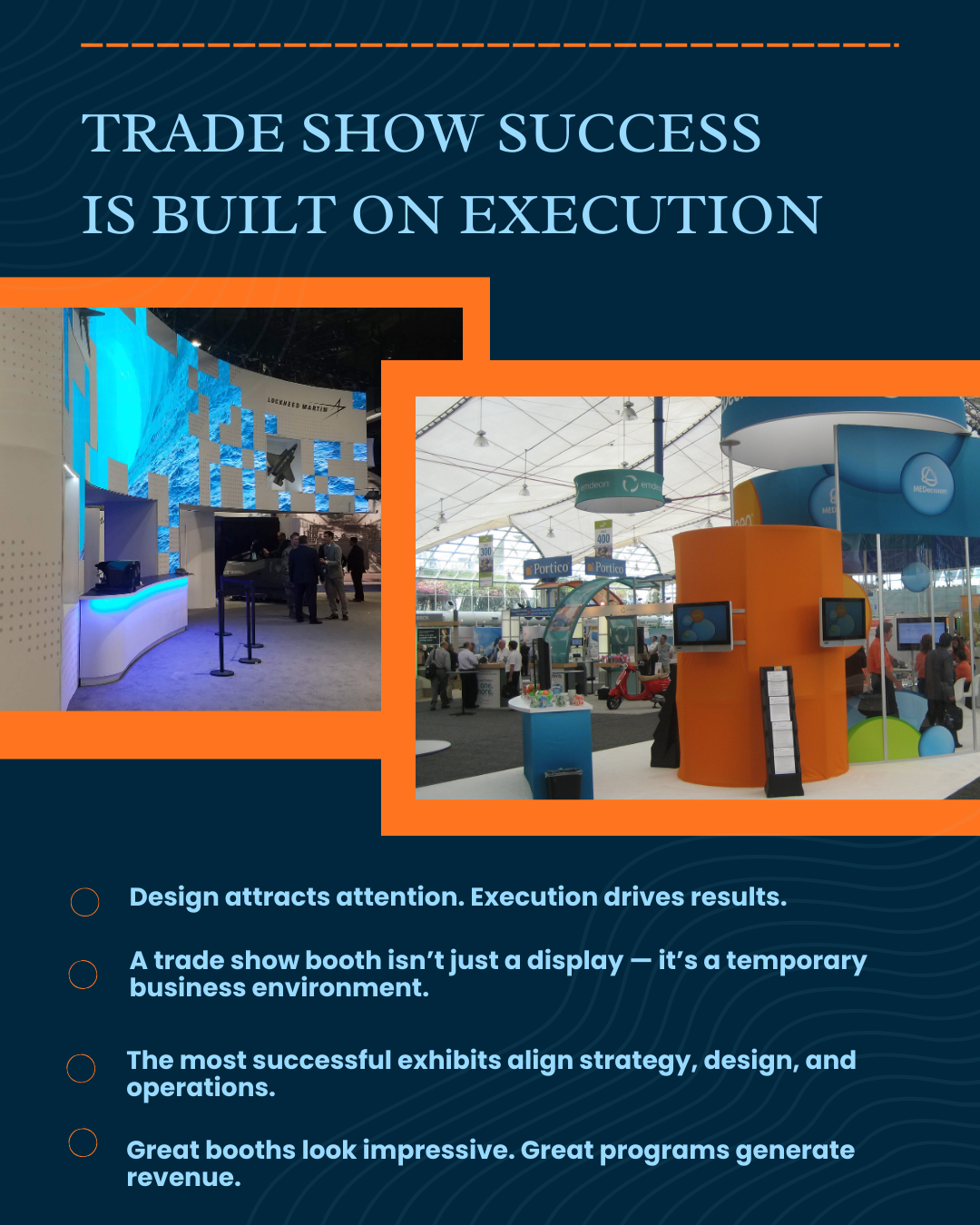
The reason might surprise you.
It’s not the booth design.
The biggest mistake brands make with trade shows isn’t design. It’s execution.
In my experience working with companies across industries, the difference between a successful trade show program and an expensive missed opportunity usually comes down to how well the strategy behind the booth is translated into operational reality on the show floor.
Great design attracts attention.
Great execution delivers results.
For brand managers and marketing leaders responsible for trade show performance, understanding this distinction is critical.
Trade Show Design Gets the Attention. Execution Drives the Outcome.
Trade show exhibit design often becomes the focal point of planning discussions. Teams debate layouts, graphics, lighting, and architectural elements. While these elements are important, they are only one component of a much larger system.
A trade show booth is not simply a visual asset.
It is a temporary business environment that must function efficiently under intense time constraints and high expectations.
That environment must support:
Product demonstrations
Sales conversations
Lead capture and data collection
Brand storytelling
Staff workflow and movement
Logistics and installation
Visitor flow and engagement
When these operational components are not aligned with the marketing strategy, even the most visually impressive exhibit can underperform.
The brands that consistently win at trade shows understand that execution is a strategic discipline, not a logistical afterthought.
The Strategy–Execution Gap in Trade Show Marketing
One of the most common challenges I see is a gap between marketing strategy and operational execution.
Marketing teams develop strong concepts and messaging. They define goals such as brand awareness, lead generation, or product launch visibility. But translating those objectives into a fully operational exhibit environment requires a different kind of thinking.
It requires aligning three distinct functions:
Marketing strategy
Defines the brand message, audience targets, and campaign objectives.
Exhibit design and fabrication
Transforms strategy into a physical environment that represents the brand.
Operational execution
Ensures the booth functions smoothly during shipping, installation, staffing, and engagement on the show floor.
When these functions operate in silos, problems emerge:
Booth layouts that don’t support conversation flow
Product displays that are difficult to demonstrate
Staffing plans that don’t match visitor traffic
Lead capture systems that aren’t integrated with sales follow-up
Logistics plans that create unnecessary stress during installation
Bridging this gap requires leadership that understands both the strategic intent of marketing and the operational realities of exhibit production.
A Trade Show Booth Is a Revenue Environment, not a Marketing Decoration
Many organizations still treat their trade show booth primarily as a branding exercise.
But in reality, a well-executed exhibit functions much more like a revenue environment.
Every design and operational decision should support measurable business outcomes.
Successful trade show programs typically focus on five core performance factors:
1. Visitor Flow and Engagement
Booth layouts should guide visitors naturally into conversations with staff. Open sightlines, approachable entry points, and strategic product placement help encourage engagement.
If visitors feel unsure where to go or how to interact, opportunities are lost.
2. Staff Readiness and Alignment
Your booth staff ultimately determine the quality of the experience. Training, role clarity, and energy levels matter just as much as the physical environment.
The best exhibits create clear zones for greeting, conversation, demonstration, and deeper discussions.
3. Lead Capture and Data Strategy
Capturing leads is only valuable if the information collected can be acted on quickly.
Effective programs ensure that lead capture tools are integrated with CRM systems and follow-up workflows before the show begins.
4. Operational Discipline
Shipping schedules, installation coordination, show services, and dismantle logistics all influence the success of the program.
Operational missteps during installation can undermine even the most sophisticated marketing strategy.
5. Post-Show Conversion
The real ROI of trade shows often happens after the event.
Brands that succeed treat the show as the beginning of the sales process, not the end.
Why Execution Requires Cross-Functional Leadership
One reason execution is often overlooked is that it lives between departments.
Marketing leaders own the strategy.
Operations teams manage logistics.
Fabricators and exhibit partners build the physical environment.
Without strong coordination, important details fall through the cracks.
This is why effective trade show programs require leadership that can connect:
Marketing strategy
Production realities
Sales objectives
Budget accountability
When these functions are aligned early in the process, projects move more efficiently and results improve dramatically.
Design Still Matters — But It Must Serve the Strategy
None of this diminishes the importance of design.
A well-designed exhibit can:
Attract attention on a crowded show floor
Reinforce brand identity
Communicate key messaging quickly
Create memorable visitor experiences
But design should always serve the broader objective of enabling meaningful interactions between the brand and its audience.
The most successful exhibits combine creative design with operational intelligence.
The Advantage of Partners Who Understand Both Marketing and Manufacturing
Trade show programs sit at the intersection of two worlds that rarely overlap:
Creative marketing strategy and physical manufacturing.
Exhibits must be designed, engineered, fabricated, shipped, installed, staffed, dismantled, and often reused across multiple events.
Working with partners who understand both sides of this equation can dramatically reduce risk and improve results.
These partners help ensure that:
Designs are feasible within real production timelines
Budgets reflect actual material and labor costs
Installation plans support the intended visitor experience
Logistics are managed proactively
This alignment ultimately allows brand teams to focus on what matters most: meaningful engagement with their audience.
Rethinking Trade Show Success
As trade show marketing continues to evolve, the brands that stand out will not simply have the biggest booths or the most elaborate structures.
They will be the ones that treat their exhibit programs as strategic business operations, not just creative projects.
Because at the end of the day, the biggest mistake brands make with trade shows isn’t design.
It’s execution.
When strategy, design, and operations work together, trade shows become one of the most powerful growth channels available to B2B organizations.
Planning a Trade Show Exhibit That Actually Performs?
If you’re preparing for an upcoming trade show, the most successful programs begin with the right strategy long before the booth reaches the show floor. Aligning trade show exhibit design, fabrication, logistics, and on-site execution is what ultimately determines whether your investment generates meaningful engagement and qualified opportunities.
At Steel City Displays, we partner with brand managers, marketing leaders, and event teams to develop custom trade show exhibits and experiential brand environments that balance creative impact with operational discipline. Our team supports the full lifecycle of a trade show program, including exhibit design, fabrication, exhibit rentals, shipping logistics, installation and dismantle, and exhibit program management.
If you’re evaluating your current exhibit strategy or planning for an upcoming event, we would welcome the opportunity to share perspective and help you think through the execution details that make trade shows successful.
Start the conversation with our team to explore how your next trade show exhibit can deliver stronger results.
About the Author
Kate Blom-Lowery, Steel City Displays, CMOO is a marketing and experiential brand strategy leader with more than two decades of experience across higher education, healthcare, and B2B industries. She leads strategic initiatives that connect brand storytelling with operational execution in experiential environments, including trade shows, exhibits, and live brand activations.