
How to Build a Trade Show Budget That Gets CFO Approval
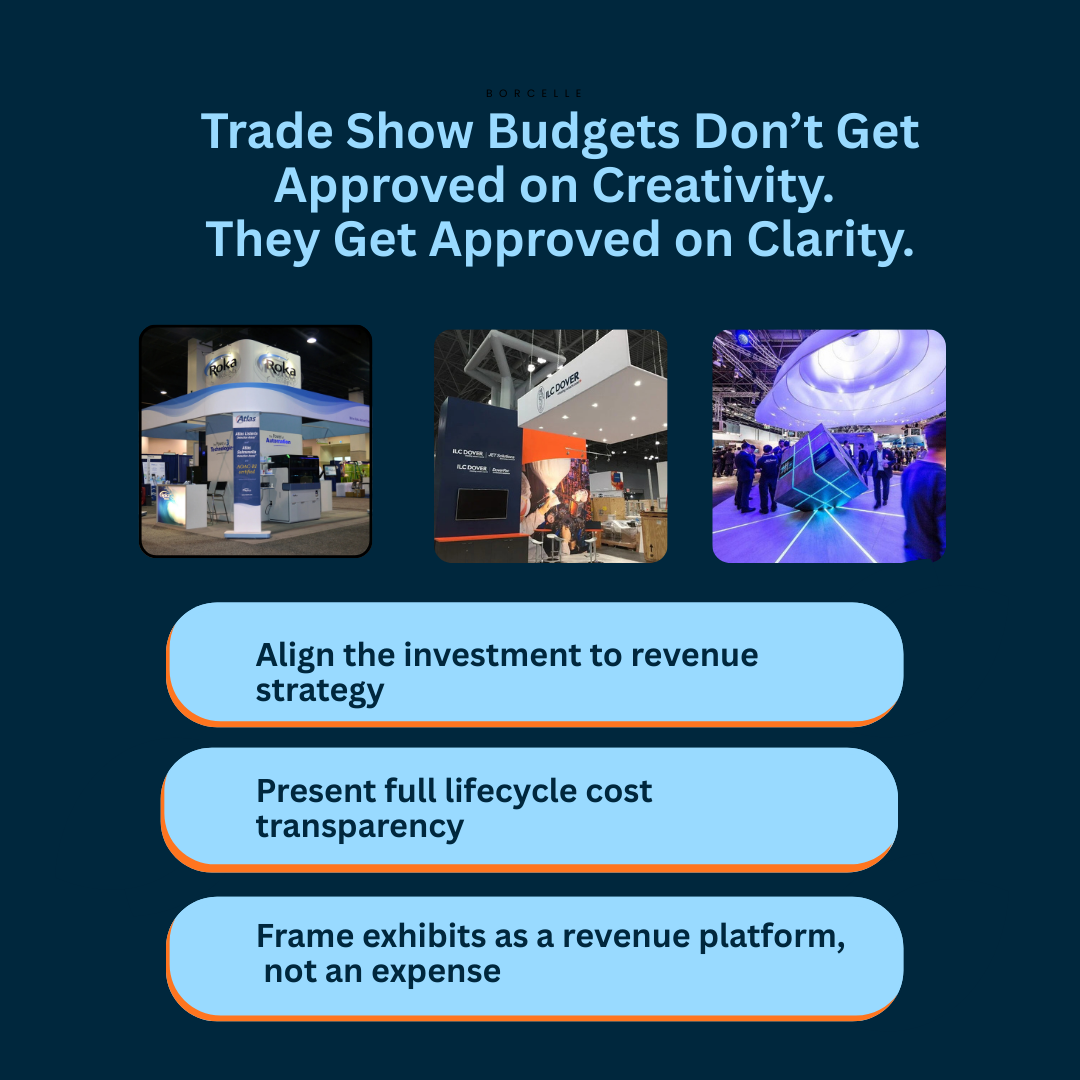
Trade show budgets don’t get rejected because they’re too ambitious — they get rejected because they lack financial clarity.
If you’re a brand manager or marketing leader preparing a trade show exhibit budget, your goal isn’t just creativity; it’s credibility. CFO approval depends on whether your proposal reads like a business investment, not a marketing expense.
At Steel City Displays, we design and fabricate custom trade show exhibits and manage end-to-end trade show logistics and installation for brands that require both creative impact and operational discipline. That financial discipline starts with how the budget is built.
Here’s how to structure a trade show budget that earns executive buy-in.
1. Align the Trade Show Budget with Revenue Strategy
Before you calculate booth costs, define the business objective.
Is the event focused on:
New customer acquisition?
Strategic account retention?
Product launch visibility?
Market expansion?
Channel development?
A CFO wants to see a clear link between the trade show investment and projected revenue impact.
Pro Tip: Present pipeline value, not just lead count.
If your average deal size is $75,000 and you close 20% of qualified leads, it only takes a small number of closed deals to justify a six-figure exhibit program.
2. Break Down the True Cost of a Trade Show Exhibit
A CFO-ready trade show budget should include full cost transparency.
Core Exhibit Costs
Exhibit design and engineering
Custom fabrication or rental structure
Graphics production
AV and interactive technology
Crating and storage
Show Services & Logistics
Drayage/material handling
Electrical and internet
Installation & dismantle labor (I&D)
Round-trip freight
Onsite supervision
Operational & Soft Costs
Travel and accommodations
Lead retrieval
Staffing
Promotional materials
Incomplete budgets undermine credibility.
Comprehensive budgets build trust.
3. Present Purchase vs. Rental Scenarios
One of the most effective ways to secure CFO approval is to provide options.
Best for multi-show programs and long-term brand consistency.
20x20 custom exhibit: ~$65,000–$150,000+
30x30 custom exhibit: ~$120,000–$300,000+
Custom Exhibit Rental
Best for limited show schedules or market testing.
20x20 rental: ~$35,000–$85,000
30x30 rental: ~$60,000–$150,000
Include a 3-year cost projection. Lifecycle cost comparisons demonstrate financial discipline and reduce perceived risk.
4. Show How the Investment Becomes Self-Funding
The strongest trade show budgets answer one question clearly:
How does this pay for itself?
Frame it like this:
Total investment: $100,000
Average deal size: $80,000
Close rate from qualified meetings: 20%
Two closed deals cover the program.
When positioned as a revenue multiplier, a trade show exhibit becomes a strategic growth tool, not a discretionary spend.
5. Demonstrate Operational and Financial Controls
CFOs care about risk and predictability.
Strengthen your proposal by outlining:
Job cost accounting structure
Vendor payment controls
Freight contingency planning
Pre-show preview process
Post-show storage and reuse strategy
Operational discipline signals maturity and protects margins.
6. Include a Risk Mitigation Plan
Shipping delays, labor shortages, and material cost fluctuations can affect event budgets.
Address this proactively:
Build a 5–10% contingency buffer
Confirm installation partners in advance
Lock freight early
Clarify revision timelines
When you acknowledge risk, and show how you manage it, approval becomes easier.
7. Present It Like a Capital Investment
Avoid creative-first language.
Instead of:
“We need a bold, high-impact booth.”
Say:
“We’re investing in a modular exhibit system designed to reduce per-show costs over a three-year lifecycle while increasing qualified engagement.”
Language matters. Financial framing wins.
Frequently Asked Questions About Trade Show Budgets
How much does a 20x20 trade show booth cost?
Custom builds typically range from $65,000–$150,000 depending on materials and technology. Rentals range from $35,000–$85,000.
Is renting or purchasing better for trade shows?
If you exhibit at three or more events annually, purchasing often provides stronger long-term ROI.
How do you justify trade show ROI to a CFO?
Focus on pipeline value, revenue influenced, cost-per-acquisition, and lifecycle efficiency, not just lead volume.
What should a complete trade show budget include?
Design, fabrication or rental, logistics, show services, installation & dismantle, travel, staffing, and contingency.
Final Takeaway: CFO Approval Comes Down to Clarity
A strong trade show budget:
Aligns with revenue goals
Provides transparent cost breakdowns
Offers purchase vs. rental options
Demonstrates lifecycle efficiency
Includes risk management
Speaks in financial terms
Trade shows aren’t expenses, they’re revenue platforms.
When your budget reflects that mindset, approval becomes a business decision, not a negotiation.
Ready to Build a Trade Show Budget That Wins Executive Approval?
If you’re planning a 20x20 or 30x30 exhibit and need realistic cost projections, lifecycle comparisons, and revenue-aligned strategy, our team can help.
We design and fabricate custom trade show exhibits with financial discipline, operational transparency, and measurable performance in mind.