
Storytelling That Converts: How Trade Show Brands
Are Driving Real Lead Generation in 2026
By Kate Blom-Lowery, Chief Marketing & Operations Officer, Steel City Displays
Trade shows are back in full force but the old playbook isn’t delivering the ROI it once did.
Today’s attendees are more selective, more distracted, and more outcome-driven than ever. They don’t want another branded wall or product shelf. They want relevance. They want meaning. And most of all, they want experiences that help them decide whether your brand belongs in their future.
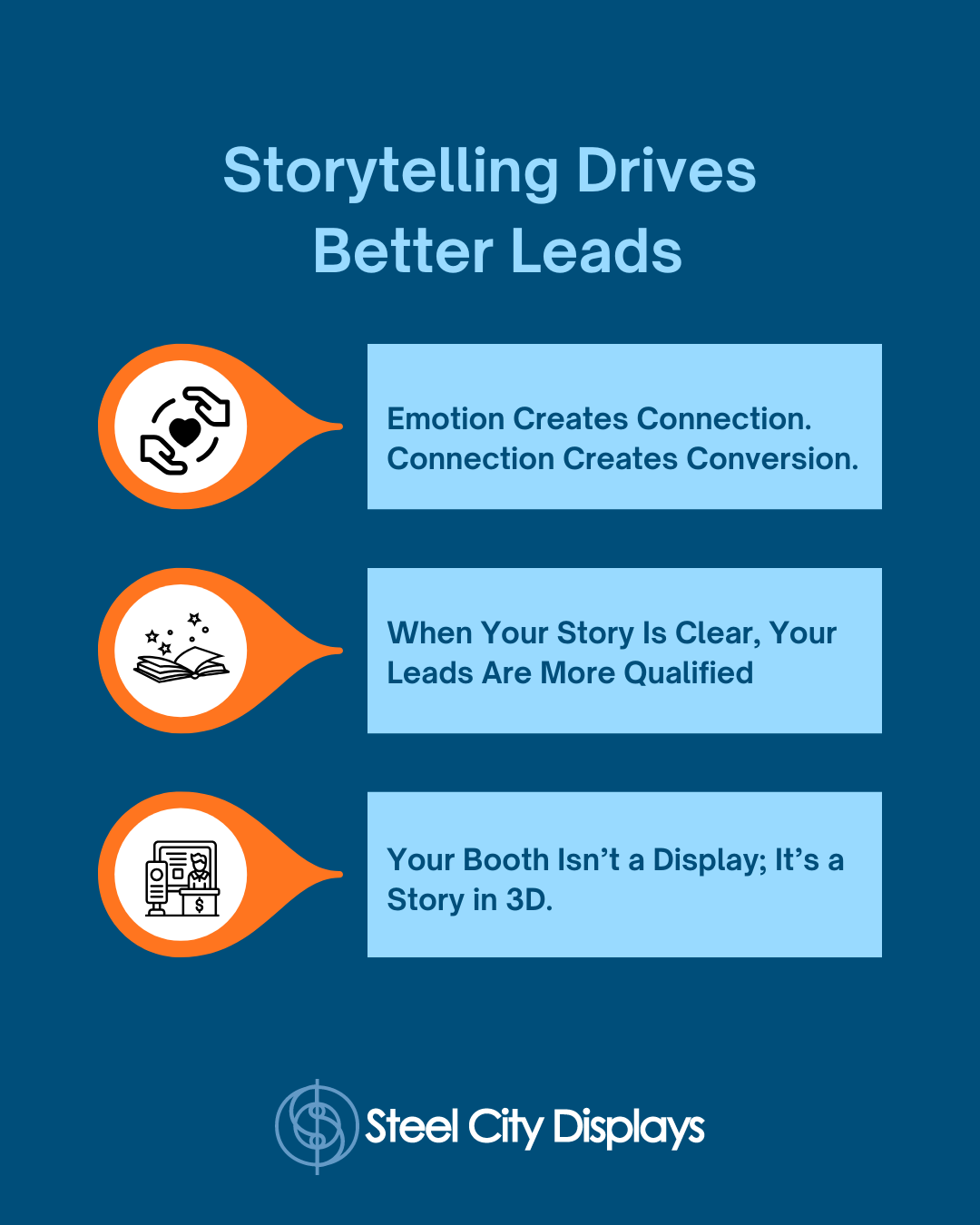
That’s why the most effective exhibitors in 2026 aren’t just designing booths. They’re designing stories and those stories are becoming one of the most powerful drivers of trade show lead generation.
Why Storytelling Outperforms Traditional Lead Capture
In a crowded exhibit hall, attention is the scarcest resource. Traditional tactics badge scans, giveaways, generic demos may collect contacts, but they rarely capture intent.
Storytelling changes that dynamic.
A well-crafted narrative does three critical things:
Creates emotional connection – People remember how you made them feel, not just what you showed them.
Clarifies value – Stories simplify complex offerings into outcomes audiences can instantly understand.
Qualifies the right leads – When someone engages deeply with your story, they’re self-selecting as a higher-intent prospect.
As Kate Blom-Lowery, Chief Marketing & Operations Officer at Steel City Displays, explains:
“Storytelling isn’t about being clever; it’s about being intentional. When your exhibit tells a clear, human story about who you serve, what problem you solve, and why it matters, the leads you capture are more qualified, more engaged, and far more likely to convert.”
The 2026 Shift: From Booths to Branded Experiences
Across major trade shows—from technology to healthcare to sports marketing—top brands are moving away from static displays and toward experience-driven storytelling environments.
Instead of asking, “How do we show our products?”
Leading exhibitors are asking, “What journey do we want our audience to walk through?”
This evolution is redefining B2B trade show marketing and is driven by three major trends:
1. Experience as a Differentiator
When products look similar, the experience becomes the differentiator. Story-based environments help prospects visualize how your solution fits into their world.
2. Data-Driven Exhibit Design
Heat mapping, dwell-time tracking, and engagement analytics now show which parts of your story resonate—and which don’t—making exhibit design for lead generation measurable.
3. Pre-Show and Post-Show Integration
The strongest brands align digital campaigns, on-site experiences, and follow-up content into one connected narrative that improves event marketing ROI.
How Do You Generate High-Quality Leads at Trade Shows?
This is the most common question brand managers ask and the answer is not “scan more badges.”
Here’s what actually works for trade show lead generation in 2026:
Design engagement zones that address your audience’s top challenge
Personalize demos by industry, role, or use case
Use content-based CTAs (strategy sessions, audits, playbooks) instead of generic giveaways
Capture behavioral data (what they interacted with, how long they stayed, what questions they asked)
Follow up with context, not canned emails
When storytelling drives the experience, lead capture becomes a natural extension of value—not an interruption.
How to Build a Lead-Generating Story for Your Exhibit
1. Start With the Problem, Not the Product
Your audience doesn’t wake up wanting a booth visit they wake up with challenges.
Anchor your exhibit around:
The problem your customer is trying to solve
The tension or pain they feel
The outcome they’re striving toward
This is the foundation of high-performing experiential marketing strategy.
2. Design a Physical Narrative Flow
Think of your booth as a three-act story:
Act I – Attract:
A bold visual or message that calls out your audience’s challenge.
Act II – Engage:
Interactive elements, demos, or environments that show how your brand addresses that challenge.
Act III – Convert:
A clear call-to-action that captures leads in context consultations, content downloads, or personalized next steps tied directly to what they just experienced.
As Blom-Lowery notes:
“Every square foot of an exhibit should have a purpose. When design, messaging, and interaction are aligned around one clear story, lead capture becomes a natural extension of the experience, not an interruption.”
3. Use Micro-Stories to Qualify Leads
Not every visitor is the same. Segment your storytelling:
Different zones for different buyer personas
Multiple demo paths based on industry or use case
Personalized digital touchpoints triggered by visitor behavior
This allows your sales team to follow up knowing not just who visited but which part of your story mattered most.
4. Connect On-Site Storytelling to Post-Show Nurture
The most successful exhibitors don’t stop at the scan.
They extend the story through:
Personalized follow-up emails referencing the experience
Content tied to the specific narrative path the visitor engaged with
Retargeting campaigns that reinforce the same message seen on the show floor
This is where event marketing ROI is realized: faster sales cycles, higher conversion rates, and better lead quality.
A Real-World Example: Storytelling That Drove Attendance and Lead Generation
In one recent engagement, Kate Blom-Lowery partnered with a manufacturing trade show producer to reimagine how the event was positioned to potential attendees. Rather than promoting the show through a traditional exhibitor-first lens, Kate led a story-driven marketing strategy focused on why the event mattered to the people attending it.
Using an integrated approach that combined social media storytelling, industry influencers, and narrative-led content, the campaign shifted the conversation from “what will be on the floor” to “who this event is for, what challenges they’re facing, and what they will gain by being there.”
The results were measurable and long-lasting:
52% increase in event attendance and 30% in pre-show registration
20% growth across all age demographics, including younger professionals traditionally harder to reach
Stronger lead generation for exhibitors, driven by more qualified and engaged attendees
Deeper, sustained social media engagement, creating an owned audience for future event storytelling and promotion
As Blom-Lowery notes:
“When you stop marketing a show as a schedule and start telling the story of who it serves and why it matters, you don’t just fill the floor, you build a community that returns, engages, and converts.”
This is the power of storytelling when applied not only to exhibit design, but to the entire event marketing ecosystem, from awareness and registration to on-site engagement and post-show growth.
The ROI of Story-Driven Exhibits
When storytelling is executed with purpose, results follow:
Higher dwell time in exhibit spaces
Better lead quality based on engagement, not volume
Stronger brand recall weeks and months after the event
Improved sales alignment, because every lead comes with context
According to Blom-Lowery:
“Trade shows shouldn’t be about how many leads you collect they should be about how many right conversations you start. Storytelling ensures those conversations are relevant, memorable, and measurable.”
The Future of Trade Show Lead Generation
As experiential marketing continues to evolve, storytelling will become the foundation of every high-performing exhibit strategy.
Brands that win in 2026 and beyond will:
Design with intention
Measure what matters
Treat every trade show not as an event but as a chapter in a larger brand story
Because in an era of endless options, the brands that tell the clearest stories don’t just attract attention. They earn trust. They create connection. And they generate leads that actually convert.